

TPE vs Silicone Sex Dolls: Which Material Fits You Best?


Material affects the parts of ownership you notice most: how soft she feels, how clearly her details show, how easy she is to clean, and how much surface care she needs over time. This guide compares TPE and silicone sex doll materials in practical terms, so you can choose the material that fits your preferences and daily routine.
Contents
- The Essentials: TPE vs. Silicone
- What Is a TPE Companion Doll?
- What Is a Silicone Companion Doll?
- Which Looks and Feels More Realistic?
- Surface Care and Staining
- Material Odor
- Durability and Repair Compatibility
- What This Means for Daily Ownership
- Which Material Should You Choose?
- Product Recommendation
- Frequently Asked Questions
The Essentials: TPE vs. Silicone
TPE offers a softer, more yielding embrace at an approachable entry point, requiring attentive routine upkeep. Silicone provides sharper sculptural detail and a dry, matte finish that demands far less day-to-day maintenance.
Feature
TPE
Silicone
Feel
Softer, yielding, natural give
Firmer, smooth, dry matte touch
Visual Detail
Soft contours with gentle edges
Fine skin texture, vascular detail, crisp definition
Daily Care
Periodic cleaning and regular powdering
Simple wipe-down; naturally dry surface
Makeup Longevity
May need light touch-ups every 3–6 months
Long-lasting; hand-painted layers permanently bond
Heat Sensitivity
Softens under high heat; keep below 104°F / 40°C
Highly heat-stable
Stain Risk
Susceptible to dark dye transfer
Highly resistant, but avoid prolonged contact
Odor
Subtle initial scent; fades over time
Virtually odorless
Durability
Flexible; avoid prolonged pressure in storage
Retains structural form and sculpted detail long-term
Price
More accessible
Higher investment

What Is a TPE Companion Doll?
TPE, short for thermoplastic elastomer, is a soft, highly elastic material shaped around an articulated skeleton to form the doll’s body. It is valued for its smooth surface, flexible stretch, and strong rebound, which allow the body to press in more deeply and return with a soft, yielding feel.
Because TPE is easy to color and shape, it can create a warm, skin-like finish at a more accessible starting price for a TPE sex doll. The same softness also means her surface asks for more attentive care: TPE can hold moisture, pick up unstable dyes more readily, and may need light powdering after cleaning to keep the surface dry.
What Is a Silicone Companion Doll?
Luxury silicone companion dolls are crafted from platinum-grade silicone over an articulated metal skeleton. Cured to a smooth, non-porous finish, silicone faithfully preserves lifelike facial features, delicate blushing, and defined contours with lasting stability.
This non-porous surface also simplifies everyday maintenance. The material resists moisture, holds no lingering scents, and wipes clean easily without routine powdering. Softer zones can be integrated into the bust and hips for a more yielding feel, while the torso and structural contours remain firm to support her silhouette.

Which Looks and Feels More Realistic?
If touch matters most, TPE delivers a softer, more yielding feel. If close-up detail matters most, silicone appears sharper and more defined. Realism ultimately comes down to whether you prioritize physical softness in the hand or crisp definition to the eye.
Tactile Realism: Softness and Give
TPE yields more deeply under touch, offering a natural, flesh-like give. Silicone provides firmer resistance with a silky, dry matte finish. To combine the benefits of both, select silicone models incorporate ultra-soft silicone or gel-filled zones in the bust and hips.
Visual Realism: Shape and Detail
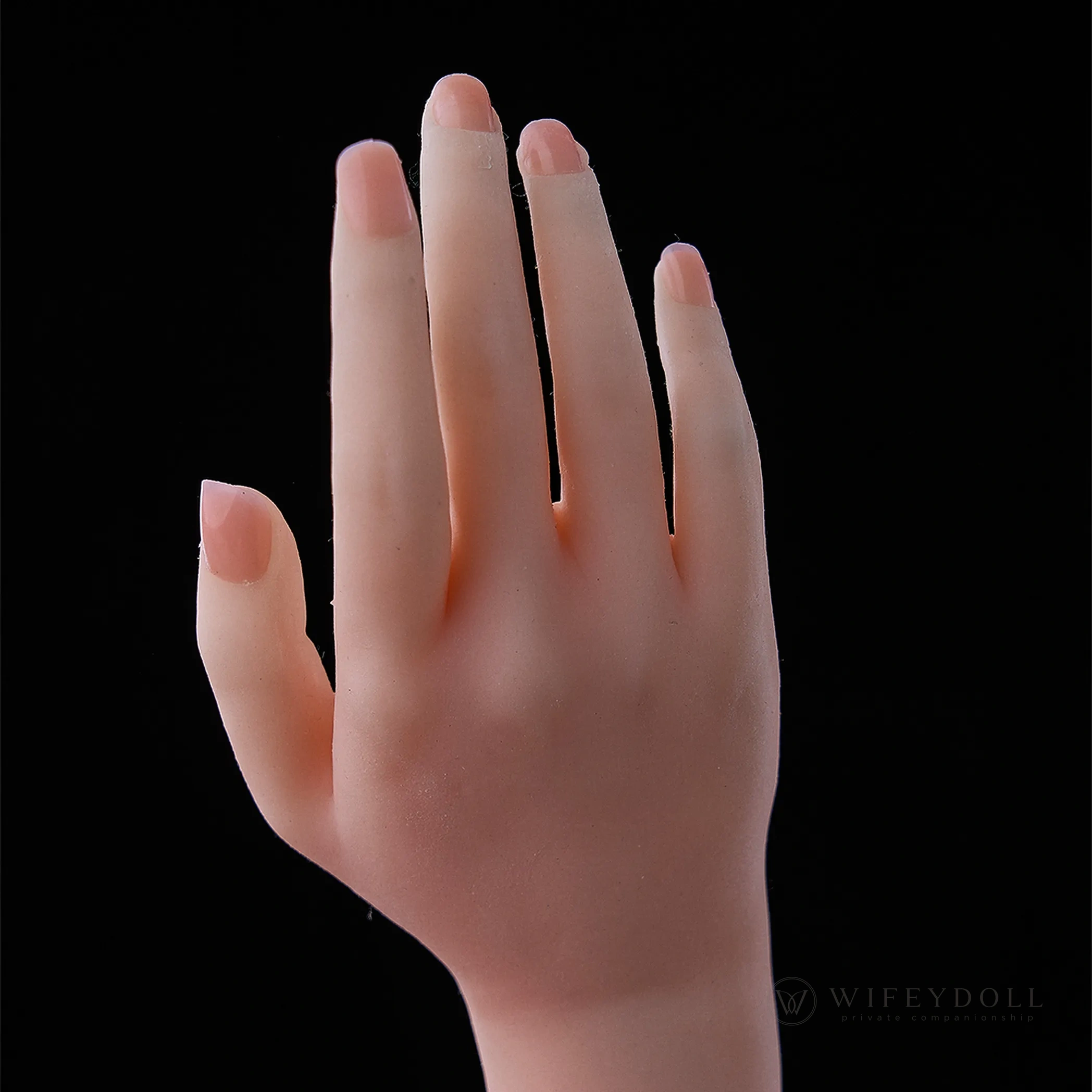
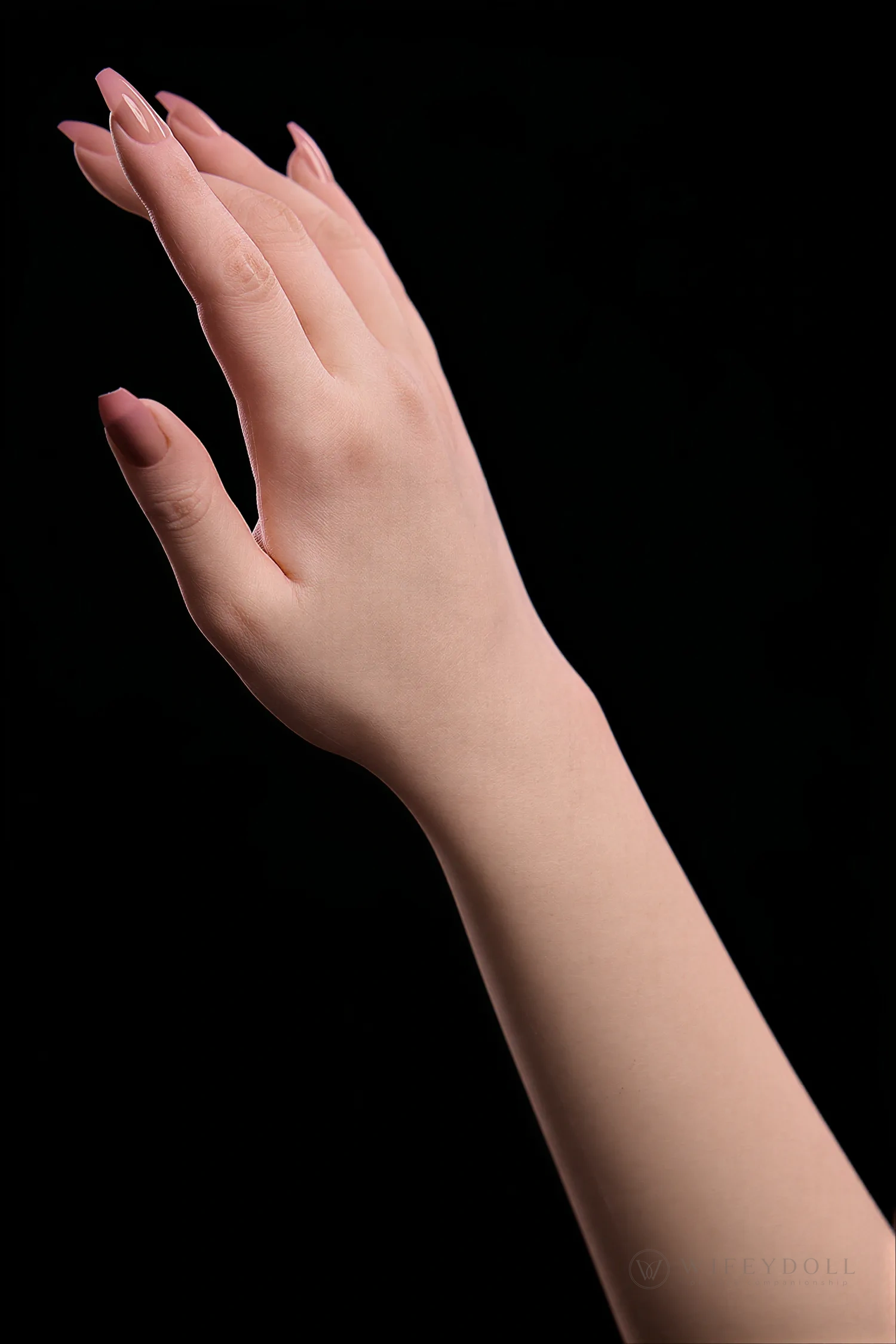
Silicone captures micro-details with exceptional clarity—holding defined pores, subtle veins, lip contours, and multi-layered skin tones. TPE provides soft, natural curves, though micro-textures appear gentler around the edges.
Warmth and First Touch
TPE feels naturally warm and gentle to the touch, while silicone presents a smooth, cooler surface feel.
Here is the side-by-side comparison most buyers need before choosing between TPE and silicone sex dolls.
TPE Hand vs. Silicone Hand
Surface Care and Staining
TPE requires dedicated surface care. It absorbs dark dye more readily and naturally develops surface oils over time; a light dusting of care powder easily restores its dry, velvety touch. Silicone remains naturally dry and wipes clean effortlessly. However, hand-painted details on both materials require gentle handling, and neither surface is completely immune to staining.
For the shared cleaning routine, see theCleaning & Storage Guide. For powdering, stain prevention, and material-specific products, continue with the TPE & Silicone Care Guide.
Material Odor
A new TPE companion doll may carry a mild factory scent straight out of the box, which dissipates naturally within a few days in a well-ventilated room. Platinum silicone is virtually odorless upon arrival.
Durability and Repair Compatibility
Because TPE is exceptionally supple and yielding, articulated joints such as the wrists, fingers, and neck benefit from gentle positioning to prevent unnecessary stretching or surface creases.
Repairs Are Material-Specific
TPE and silicone need different repair products, and using the wrong one can affect the surface. For step-by-step repair instructions, see theDoll Repair Guide.
What This Means for Daily Ownership
Taken together, the difference is practical. TPE delivers a softer, more flesh-like warmth that invites attentive hands-on care. Silicone offers a more defined silhouette, crisp lasting detail, and a relaxed, low-maintenance routine.
Which Material Should You Choose?
To find your ideal match, weigh three practical factors: your preference for tactile softness, your eye for fine visual detail, and your comfort level with routine care.
Your Priority
What to Consider
Recommended Choice
Maximum flesh-like softness and warmth
Delivers deep, yielding give, but requires regular cleaning and powdering
TPE
Crisp visual realism and intricate skin details
Retains high-definition pores, delicate blushing, and defined body lines long-term
Silicone
Effortless cleaning and minimal daily upkeep
Non-porous surface wipes clean easily and stays dry without routine powdering
Silicone
Product Recommendation
These two models show how material changes the sex doll ownership experience in practice. Miki highlights TPE softness and a lighter body feel, while Victoria shows the firmer structure and cleaner surface detail of silicone.

Miki — Slender Soft-Touch 154cm TPE Companion Doll
154 cm | Soft TPE | Natural Skin Tone | Approx. 33 kg
Miki is a compact TPE model with a soft, flexible feel and a gentle visual style. She is a useful starting point for customers who want a lighter, softer body and are comfortable with the regular care TPE needs.

Victoria — Athletic Dark Tan 168cm Silicone Companion Doll
168 cm | Platinum Silicone | Dark Tanned Skin | Approx. 41 kg
Victoria is a 168cm silicone model with a defined athletic shape and dark tanned skin. Victoria’s platinum silicone gives her a firmer, cleaner finish, helping her body contours, facial details, and smooth skin texture stay crisp over time.
Frequently Asked Questions
Which feels more realistic, silicone or TPE?
Both offer authentic realism in distinct ways. TPE delivers a softer, warmer, and more yielding touch that cushions naturally in your hands. Silicone provides a firmer, dry matte feel, capturing ultra-fine details such as pores, delicate veins, and crisp facial contours with exceptional clarity.
Does TPE have a more noticeable odor than silicone?
Yes, a new TPE companion doll may carry a mild material scent straight out of her packaging. This dissipates naturally within a few days in a well-ventilated room, whereas platinum silicone arrives virtually odorless.
Can dark clothing stain TPE or silicone?
Yes, dark fabrics can transfer dye to both materials. TPE absorbs unstable dyes more readily, while silicone is significantly more resistant, though neither surface is entirely stain-proof.
How does silicone durability compare with TPE over time?
Silicone excels at preserving defined contours and fine skin texture over years of ownership. Because TPE is softer and more yielding, articulated joints such as the wrists, fingers, and neck benefit from gentle handling to prevent stretching or lasting pressure marks.
Which material attracts more surface dust and lint?
Silicone can develop subtle static electricity that attracts floating lint and fabric fibers, though these wipe away instantly with a damp cloth. TPE attracts dust primarily when surface oils emerge, relying on regular powdering to maintain a smooth, non-sticky barrier.
